Your Baby Belongs to God: A Biblical Case for Infant Baptism

From Abraham to Pentecost, God's covenant has always included children. Here's why that still matters, and what your baby's baptism is actually declaring.
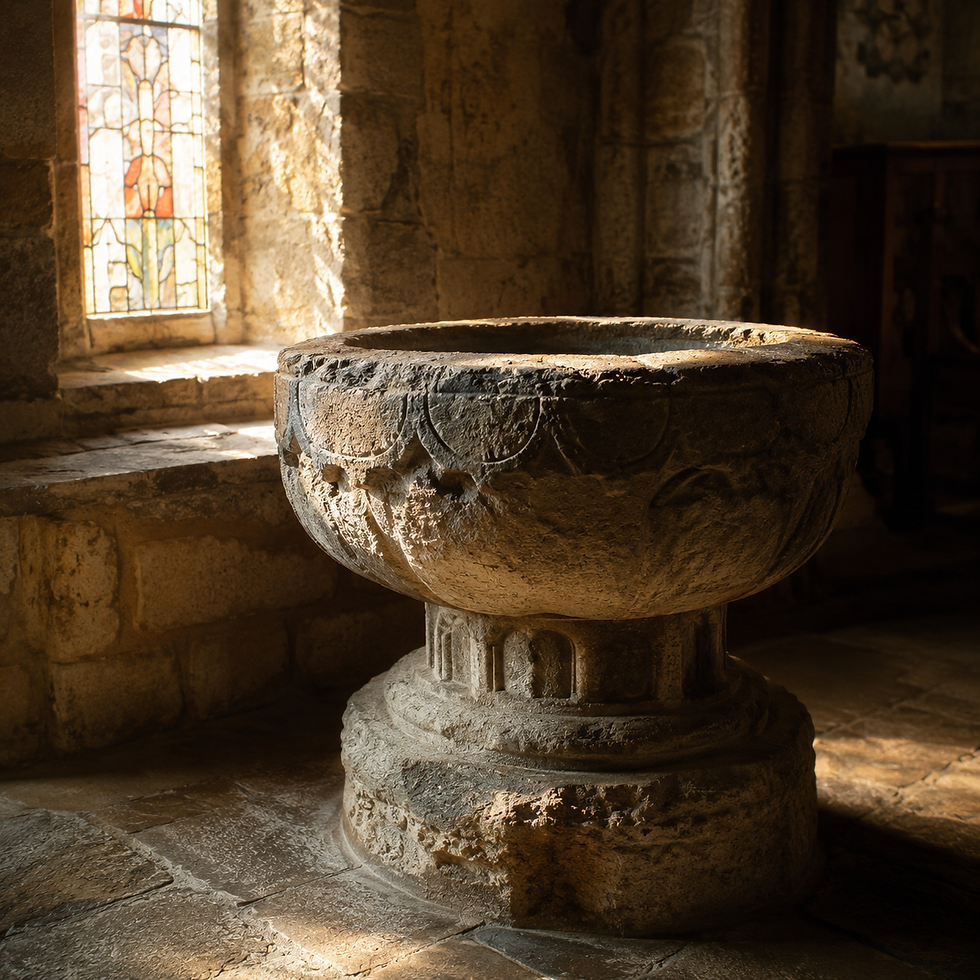
Most people raised in Baptist or non-denominational churches assume infant baptism is a Catholic thing, a dead tradition, or something that doesn't really matter.
And the truth is, it matters.
Anglicans, Lutherans, Methodists, Episcopalians, and Presbyterians, representing the majority of Protestantism for most of church history, have all practiced it. And, these weren't/aren't fringe groups; these are Reformation churches. They didn't baptize babies because they couldn't read their Bibles. They did it because they could.
This post is not going to be mean towards our Baptist brothers and sisters. They love Jesus. But on this one, I think they're missing something beautiful, and something the Bible is actually pretty clear about.
Let's walk through it.
The Promise Was Never Just for You
On the day of Pentecost, Peter preached the first Christian sermon. Three thousand people were converted, and here's what he said:
"The promise is for you and for your children and for all who are far off, everyone whom the Lord our God calls to himself." ~Acts 2:39
Here's the question that changes everything and must be answered: What did those Jewish people hear when Peter said, "Your children"
They didn't hear a metaphor. They didn't hear "your spiritual descendants." They heard exactly what every Jewish person for two thousand years had been trained to hear: Your actual kids belong to this covenant.
That's been God's pattern since Abraham. When God made His covenant with Abraham, He didn't just include Abraham. He included his household and his children.
"I will establish my covenant between me and you and your offspring after you throughout their generations" (Genesis 17:7). The sign of that covenant, circumcision, was placed on eight-day-old boys who had no idea what was happening. They couldn't profess faith, and they couldn't articulate doctrine. And yet God said: Mark them. They're mine.
Baptism is the New Covenant equivalent of circumcision (Colossians 2:11-12). Same covenant. Expanded reach. Different sign.
What Baptism Is Actually About
Here's where most of the confusion lives.
Our Baptist friends read baptism as our declaration, a public profession of our faith, our decision, and our obedience. If that's what baptism is, then of course a baby can't and shouldn't be baptized. Because we all know babies can't decide anything.
But that's not what baptism is.
I think this is the simplest and sharpest way to say it: Paedobaptism (infant baptism) is what God is saying about us. Credobaptism (believer's baptism) is what we are saying about God. That's a huge difference, and it's the heart of the whole debate. One puts God's action at the center. The other puts our actions at the center.
We must remember that baptism is God's declaration over us. It's not primarily about what we're doing, it's about what He's already done. It's the covenant sign. It marks someone as belonging to the covenant community, just like circumcision operated. Baptism declares: this person is claimed by God, placed under His promises, and is being raised in the household of faith.
This is exactly why Paul can say in 1 Corinthians 7:14 that the children of even one believing parent are holy, set apart, consecrated, and belong to God's covenant sphere. It's the same covenantal language used throughout the Old Testament, and it's not a metaphor. Paul didn't feel the need to explain it because his readers already understood it.
The Baptist position actually reverses the logic of grace. It makes baptism about our act of obedience. The covenantal position says, "No, this is about Christ's faithfulness to His promises." He's the one doing something here. We're receiving it.
This Is Not a Baby Dedication
I think it's important, before going any further, to name what infant baptism is not, because a lot of churches have replaced it with something that isn't in the Bible at all.
Baby dedications are not in Scripture. Not once.
There's no chapter, no verse, and no implied practice anywhere in the Old or New Testament of parents bringing a child before God to express their intentions for how they plan to raise them. That's a sentiment, not a sacrament. It's not a covenant act. It was invented, largely, as a way to honor the instinct that something should happen when a child is born into a believing family, while rejecting the historic practice that actually addressed that instinct.
The Bible gives us baptism. It gives us a covenant sign with covenant meaning attached to covenant promises. What it doesn't give us is a ceremony built around what we plan to do.
If you're sensing that something significant should happen when a child is born into the household of faith, you're right; that instinct is correct. The church has always had an answer for that instinct. It's just not the one printed on a dedication certificate.
How Do We Differ From Rome?
An honest question and once that should be answered directly: If you practice infant baptism, what separates you from Catholics?
The short answer: Everything! And the difference is not small.
The Roman Catholic Church teaches that baptism itself regenerates the infant. It teaches that the water, rightly administered, washes away original sin and imparts saving grace. In their view, the sacrament is what does the saving. That's called baptismal regeneration, and we affirm that it's a serious error. Because it's one that turns the sign into the thing it signifies, ultimately obscuring the Gospel.
We DO NOT believe the water saves anyone. Ever. Baptism is a sign and a seal of God's covenant promises, not the mechanism of salvation itself.
The Westminster Confession puts it plainly: grace and salvation are not so inseparably tied to baptism that no person can be saved without it, or that all who receive it are certainly saved.
Simply put, the sign points to Christ. Christ does the saving. Those are not the same thing, and confusing them is precisely where Rome went wrong.
The difference comes down to this: Catholics believe baptism accomplishes regeneration. We believe baptism signifies the regeneration that God promises and the Spirit alone produces. One makes the sacrament the power. The other keeps the power where it belongs, with God.
So yes, we baptize infants. And no, we have nothing in common with Rome's reasons for doing so.
The Argument from Silence Is on Our Side
Here's something that doesn't get said enough in this debate.
If God intended for the New Covenant to make a radical break from everything that came before, if children were no longer to be included in the covenant community, if the promise was now for individuals only rather than for believers and their households, you would expect someone to have said so. Clearly. Explicitly. With enough emphasis to match the magnitude of the change.
Think about what that change would mean.
For two thousand years, from Abraham forward, children of covenant members were included. They received the sign and were counted among God's people. To reverse that would be the most significant shift in covenant administration in the history of redemption.
It would be bigger, in some ways, than Gentile inclusion, because at least the prophets had hinted at that.
And yet: nothing. Not a single word from Jesus. Not one line from Paul. Not a single passage anywhere in the New Testament that says, "Hey, things have changed. The promise is no longer for you and your children; it's only for the individual."
There's no hint of it. No correction of the Jewish Christians who would have naturally continued to include their children. No controversy in Acts over whether to baptize the children of new converts. No letter from any apostle saying, "You've been doing it wrong, so stop including the kids."
The silence is deafening, and it belongs to us.
When Acts records entire households being baptized — Lydia's, the Philippian jailer's, Cornelius's, Stephanas's household — nobody stops to clarify that the children were excluded. Nobody questions it, and nobody seems confused. The covenantal instinct was still operating, and no Apostle ever corrected it.
If the Baptist position is right, the New Testament is shockingly silent on a change of such enormous consequence. If the covenantal position is right, the silence makes perfect sense because nothing changed.
But What About Faith?
Great question, and it deserves an honest answer.
Baptism does not save your baby, and it never did. The sign is not the thing itself. Circumcision didn't guarantee that every Israelite was regenerate; just read the prophets. The sign pointed to the promise. It marked the child as belonging to God's covenant people, with all the privileges and obligations that come with that promise.
Do covenant children still need to be born again? Yes! Do they still need to repent and believe? Yes, absolutely! Baptism doesn't skip or excuse any of that — it just refuses to treat covenant children like strangers until they can prove themselves.
Baptism declares that they are being raised in a context where the Gospel is preached, where the Spirit works, where the promises of God are real, and it places them under God's covenant care in a meaningful way.
Think of it like this: your child was born into your family before they ever understood what a family was. They didn't choose it. They didn't earn it. But they belong to it. And you raise them accordingly, not as strangers waiting to be welcomed in, but as children of the household. Baptism says the same thing, spiritually.
This Is Not Just a Presbyterian Thing
Reformed Presbyterians like us have typically been the most articulate defenders of infant baptism from covenant theology. But we're not alone.
Martin Luther, who reformed the Western church, kept infant baptism and defended it strenuously. The Anglican tradition, going back to Cranmer and the Book of Common Prayer, has practiced it for five centuries. Historically, the Methodist tradition, rooted in John Wesley and the Episcopal Church, held it to be a meaningful covenant act as well.
NOTE: To be clear, I'm not endorsing where those denominations stand today, as many have drifted far from their theological foundations. But the historic practice across these traditions points to something: serious, Bible-believing Christians who came before us looked at Scripture and saw covenant children included. And we should pay attention.
These are not liturgical accidents; these are theological convictions held by serious, Bible-believing Christians.
The church that did not baptize infants for most of its history was actually in the minority, largely emerging from the radical Reformation in the 1500s. There's nothing wrong with being a minority, and the truth isn't determined by a vote. But it's worth knowing that credobaptism (baptism for believers only) was not the standard. It is the newer position, not the older one.
What This Should Do to You
If you're a believing parent, infant baptism isn't a guilt trip or a box to check. It's a declaration of hope.
It means standing before the congregation with your child and saying: This one is claimed. God is faithful across generations. I am raising this child in the promises of the covenant. He or she belongs to the household of faith.
It means fighting for your child's soul with the confidence that God's covenant means something, that He who promised is faithful. It means discipling your child not as an outsider waiting to be let in, but as a covenant child who needs to grow into the faith declared over them.
If you've never been in a church that practices infant baptism and this is landing differently than you expected, that's good. You don't have to have it all figured out today. Just don't dismiss something as wrong simply because you didn't grow up with it.
Because the truth is, for most of its history, the majority of Christianity believed that the children of believers belonged under the sign and seal of God's covenant promises.
And, they still do.
Comments